BECE mock exam

Science — Fast Printing Dec 2025 Science

68 questions to work through. Answer them here, or take the whole thing timed with an account.

1. [1]

BECE mock · Science

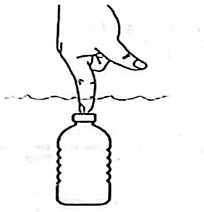
The diagram below shows an empty plastic bottle closed with an airtight stopper being pushed down into a bucket filled with water. As the bottle is pushed down, it experienced an upward push. This upward push is called
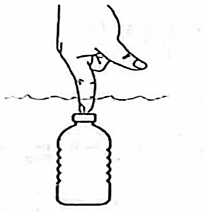
Diagram for question 1
2. [1]

BECE mock · Science

The diagram below shows an empty plastic bottle closed with an airtight stopper being pushed down into a bucket filled with water. As the bottle is pushed further down, it experiences an increasing upward push. This is because
Diagram for question 2
3. [1]

BECE mock · Science

Which of the following is a biodegradable waste?
4. [1]

BECE mock · Science

Which of the following cells is likely to have the most mitochondria?
5. [1]

BECE mock · Science

An example of a root vegetable crop is
6. [1]

BECE mock · Science

Why are fossil fuels non-renewable despite still forming today?
7. [1]

BECE mock · Science

Substances which can be broken down biologically by bacteria are said to be
8. [1]

BECE mock · Science

The role decomposers play in the carbon cycle is that they
9. [1]

BECE mock · Science

Which of the following methods of controlling soil erosion is best suited for steep slopes?
10. [1]

BECE mock · Science

Which of the following processes is not a method of heat transfer?
11. [1]

BECE mock · Science

A 2 kg object is lifted vertically at a constant speed of 3 m/s for 5 s. The work done against gravity is
12. [1]

BECE mock · Science

Which of the following elements is a noble gas?
13. [1]

BECE mock · Science

The larval stage of mosquito is also called
14. [1]

BECE mock · Science

A poultry housing method where birds are raised on a floor covered with a thick layer of wood shavings or sawdust is called the
15. [1]

BECE mock · Science

The atomic number of an element is determined by the number of
16. [1]

BECE mock · Science

Which of the following devices is not a simple machine?
17. [1]

BECE mock · Science

The rhythmic contractions that move food through the digestive tract is called
18. [1]

BECE mock · Science

West African Dwarf (WAD) is a breed of
19. [1]

BECE mock · Science

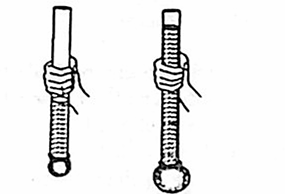
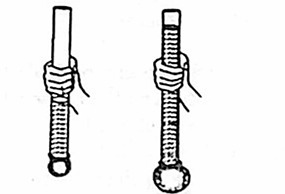
Two balloons of same size were tied to one end of two glass tubes of same diameter. Water was poured to different heights in the two tubes. The results are shown in the diagram. The results show that the size of the bulge in the balloon
Diagram for question 19
20. [1]

BECE mock · Science

Two balloons of same size were tied to one end of two glass tubes of same diameter. Water was poured to different heights in the two tubes. The results are shown in the diagram. The best explanation of the result is that the pressure exerted by water at the bottom of the container depends on the
Diagram for question 20
21. [1]

BECE mock · Science

Chemical formula of a compound indicates the
22. [1]

BECE mock · Science

In man the organ that prevents food from entering the trachea during swallowing is
23. [1]

BECE mock · Science

Which of the following fertilizers is derived from animal waste and plant refuse?
24. [1]

BECE mock · Science

Alida runs her toy car on a dry marble floor, wet marble floor, newspaper and towel spread on the floor. The force of friction acting on the car on different surfaces in increasing order will be
25. [1]

BECE mock · Science

The sub-atomic particle with negligible mass is the
26. [1]

BECE mock · Science

The hygrometer is an instrument used in determining
27. [1]

BECE mock · Science

Which of the following devices converts sound energy to electrical energy?
28. [1]

BECE mock · Science

How many atoms are present in Ca(HCO₃)₂?
29. [1]

BECE mock · Science

Which of the following sequences show the correct order of increasing complexity of life?
30. [1]

BECE mock · Science

The main source of carbohydrates in livestock feed is
31. [1]

BECE mock · Science

When lightning and thunder take place, they
32. [1]

BECE mock · Science

Elements that could easily gain electrons to form anions are
33. [1]

BECE mock · Science

The disease in humans associated with insufficient intake of iodine is
34. [1]

BECE mock · Science

The key advantage of crop rotation is that it
35. [1]

BECE mock · Science

Which of the following heavenly body is not a member of the solar system?
36. [1]

BECE mock · Science

Rainbow is formed by
37. [1]

BECE mock · Science

Which of the following pairs of diseases are spread by houseflies?
38. [1]

BECE mock · Science

Leguminous crops are used in crop rotation to add
39. [1]

BECE mock · Science

Which of the following electronic components opposes changes in current in a circuit?
40. [1]

BECE mock · Science

The primary function of a transistor is to
41. [3]

BECE mock · Science

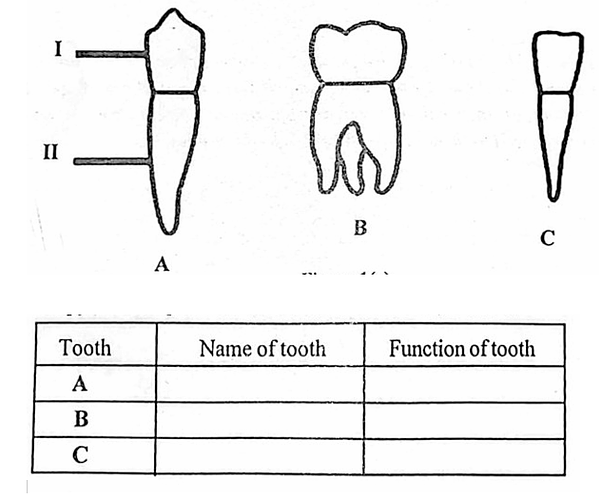
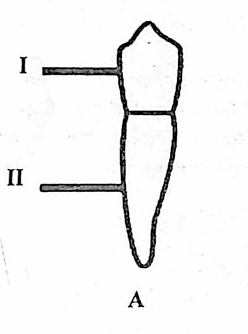
The figure shows three types of teeth in humans labelled A, B and C. Tooth A has two parts labelled I and II. Copy and complete the table for teeth A, B and C.
Diagram for question 41
42. [2]

BECE mock · Science

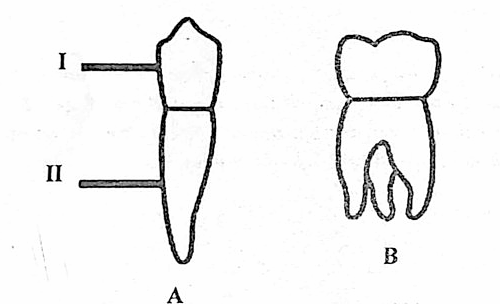
The figure shows Tooth A and Tooth B. Tabulate two observable differences in the structure of tooth A and tooth B.
Diagram for question 42
43. [4]

BECE mock · Science

The figure shows Tooth A and Tooth B. Tabulate two observable differences in the structure of tooth A and tooth B.
Diagram for question 43
44. [1]

BECE mock · Science

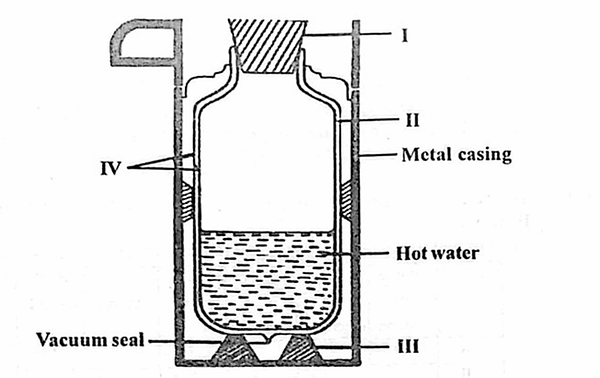
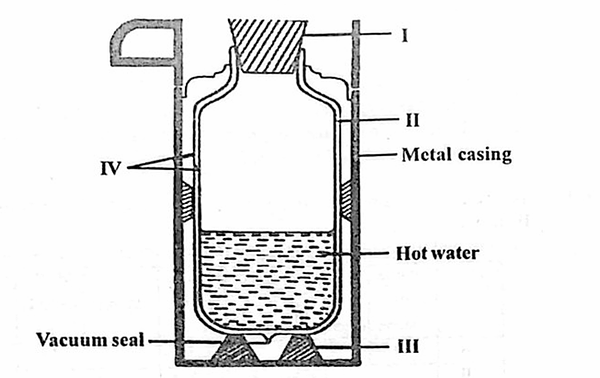
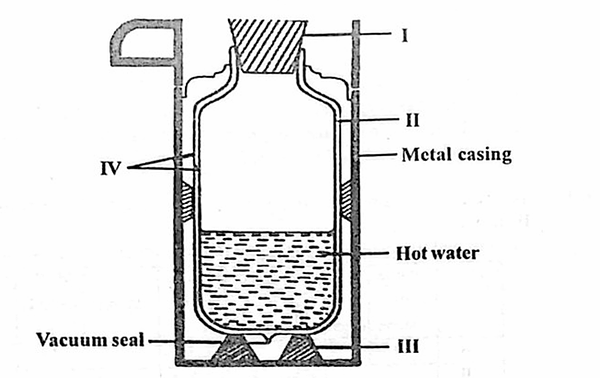
The figure shows an illustration of a device used for regulating modes of heat transfer. The device has parts labelled I, II, III and IV, with a vacuum seal, metal casing, and hot water visible. Name the device illustrated in the Figure.
Diagram for question 44
45. [4]

BECE mock · Science

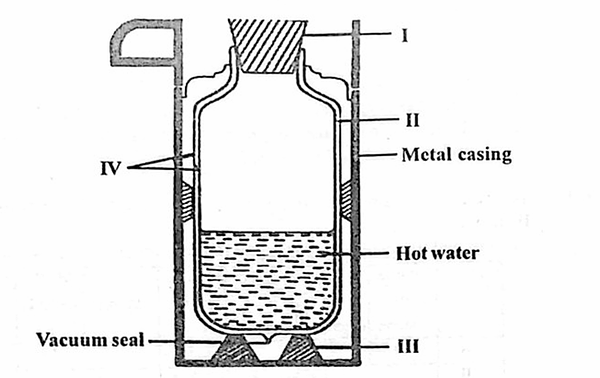
The figure shows a vacuum flask with parts labelled I, II, III and IV. Name the parts labelled I, II, III and IV.
Diagram for question 45
46. [3]

BECE mock · Science

The figure shows a vacuum flask. Name the three heat transfer processes that this device prevents.
Diagram for question 46
47. [2]

BECE mock · Science

The figure shows a vacuum flask with parts II and IV labelled. State the function of: (a) Part II (b) Part IV
Diagram for question 47
48. [3]

BECE mock · Science

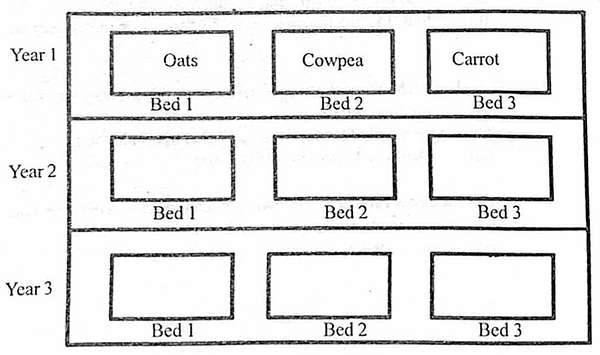
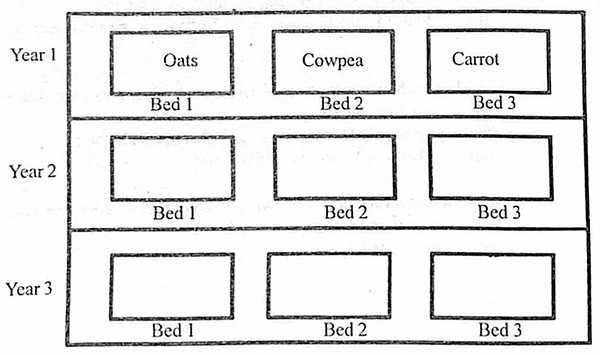
The figure shows a crop rotation plan for a 3-year cycle. A farmer is supplied with three crops: carrot, oats and cowpea, to be planted in three beds. In Year 1: Bed 1 = Oats, Bed 2 = Cowpea, Bed 3 = Carrot. What type of crop is: (a) carrot? (b) oats? (c) cowpea?
Diagram for question 48
49. [3]

BECE mock · Science

State three advantages of crop rotation as a system of farming.
50. [4]

BECE mock · Science

The figure shows a crop rotation plan. Year 1 is already completed as follows: Bed 1 = Oats, Bed 2 = Cowpea, Bed 3 = Carrot. Produce two different crop rotation plans by completing the rotation for Year 2 and Year 3.
Diagram for question 50
51. [6]

BECE mock · Science

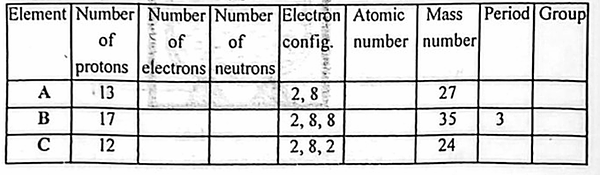
The table below shows information on three chemical elements labelled A, B and C. i. Copy and complete the table by providing all missing information including: number of electrons, number of neutrons, atomic number, mass number, period and group for each element. ii. Giving a reason, state which of the elements is a ; a. Cation b. Anion C. Atoms
Diagram for question 51
52. [4]

BECE mock · Science

Using the elements A, B and C from the table (Element A has 13 protons, Element B has 17 protons and 35 mass number, Element C has 12 protons), and giving a reason in each case, state which of the elements is: (a) a cation? (b) an anion? (c) an atom?
53. [8]

BECE mock · Science

Name the four stomach chambers of ruminants and state the function of each chamber.
54. [6]

BECE mock · Science

Explain each of the following observations using principles of states of matter: (a) ice floats on water (b) the smell of hot food travels farther than cold food (c) a balloon deflates in cold weather
55. [2]

BECE mock · Science

Describe how each of the following human activities affects the water cycle: (a) construction of concrete surfaces (b) deforestation
56. [4]

BECE mock · Science

(a) What is potable water? (b) Name three methods of separation of mixtures that can be used to obtain potable water from a muddy pond.
57. [4]

BECE mock · Science

Give four reasons why farmers might choose inorganic fertilizers over organic ones despite the latter's environmental benefits.
58. [4]

BECE mock · Science

Explain the difference between: (a) major nutrients and minor nutrients (b) compound fertilizer and straight fertilizer
59. [9]

BECE mock · Science

A small toy car of mass 2 kg is at the top of a ramp. The top of the ramp is 0.5 metres high. [g = 10 m/s²] (a) Determine the car's potential energy at the top of the ramp. (b) When the car rolls down the ramp, it reaches a velocity of 3 m/s at the bottom. Calculate its kinetic energy at the bottom of the ramp. (c) Compare the answers for (a) and (b) and state whether the two are the same or not. (d) Give a reason for the answer at (c).
60. [3]

BECE mock · Science

Describe a simple experiment using a flashlight to test whether a given mixture is a colloid or a solution.
61. [5]

BECE mock · Science

(a) What are domestic animals? (b) Tabulate three differences between domestic and wild animals.
62. [6]

BECE mock · Science

(a) What is: (i) a galaxy? (ii) a milky way? (b) State two characteristics that distinguish the inner planets from the outer planets.
63. [3]

BECE mock · Science

Give three reasons to justify the statement that 'A mangrove swamp is a combination of terrestrial, aquatic and arboreal ecosystem.'
64. [6]

BECE mock · Science

(a) What name is given to the following arrangements of elements on the periodic table? (i) rows (ii) columns (b) State the information that each of the arrangements named in (a) gives about the structure of atoms of the elements. (c) State the position of the following groups of elements on the periodic table: (i) metals (ii) non-metals
65. [6]

BECE mock · Science

(a) Name three classes of domestic animals based on their uses. (b) Give one example of a domestic animal in each class named in (a).
66. [6]

BECE mock · Science

(a) Name the accessory digestive organs of man. (b) State the digestive function of each of the accessory digestive organs named in (a).
67. [4]

BECE mock · Science

Using a triangular glass prism, a white screen, and sunlight, describe an experiment to show that sunlight is made up of seven colours.
68. [4]

BECE mock · Science

(a) Distinguish between suspension and colloid. (b) Classify each of the following mixtures as either a colloid or a suspension: (i) muddy water (ii) milk

More Science